The Thermal Envelope: Analyzing the Dynamics of Garage Apertures
Compare insulated garage doors in the modern American residence, the garage has transitioned from a detached secondary structure to an integral component of the home’s thermal envelope. As homeowners increasingly utilize these spaces for climate-controlled storage, workshops, or fitness suites, the garage door has emerged as the single largest potential breach in a building’s energy efficiency. While traditional construction often treated the garage as an “outdoor” zone, contemporary building science dictates that a non-insulated door acts as a massive radiator, conducting heat out in the winter and absorbing solar radiation in the summer.
To engage in a technical evaluation of these systems, one must look beyond the surface-level marketing of “energy savings.” The decision-making process involves a complex negotiation between thermal resistance, structural rigidity, and acoustic dampening. An insulated door is not merely about temperature; it is a multi-layered composite system engineered to provide a sound barrier against suburban noise and a structural defense against high-wind events. The density of the insulation core fundamentally alters the door’s “weight feel” and operational vibration, influencing the longevity of the entire counterbalance system.
Understanding how to effectively evaluate these products requires a granular look at material science—specifically the distinction between expanded polystyrene and chemically bonded polyurethane. These materials do not just differ in their R-value; they differ in how they interact with the steel skins of the door. As we deconstruct the variables involved, the goal is to move from a binary “yes/no” on insulation toward a sophisticated model of “best-fit” based on regional climate, garage usage, and long-term architectural goals.
compare insulated garage doors
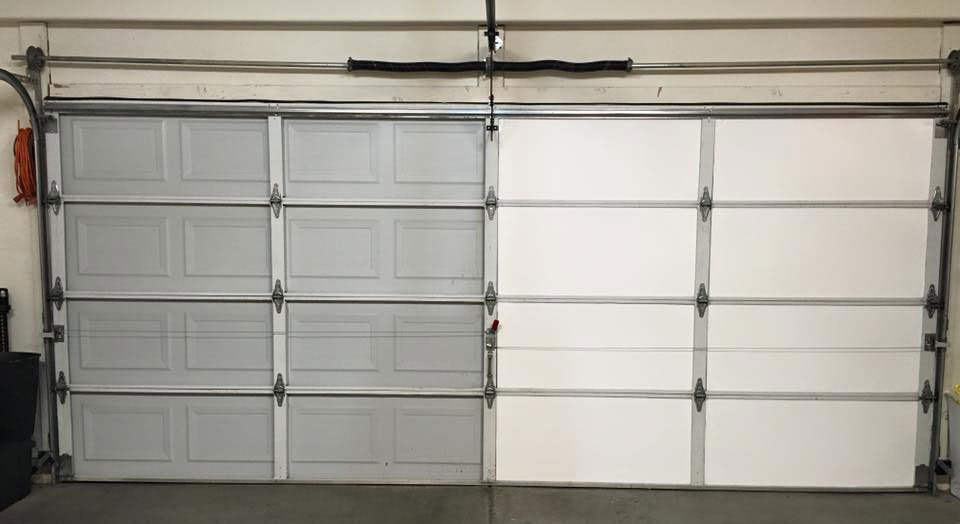
When homeowners and contractors begin to compare insulated garage doors, the discussion often starts and ends with the R-value. However, this is a dangerous oversimplification. R-value measures the thermal resistance of a specific material under static conditions, but it does not account for “U-factor,” which measures the heat transfer of the entire door assembly, including the joints, windows, and perimeter seals. A door with a high-R insulation core but poorly designed thermal breaks at the section joints will perform significantly worse than a lower-R door with superior airtightness.
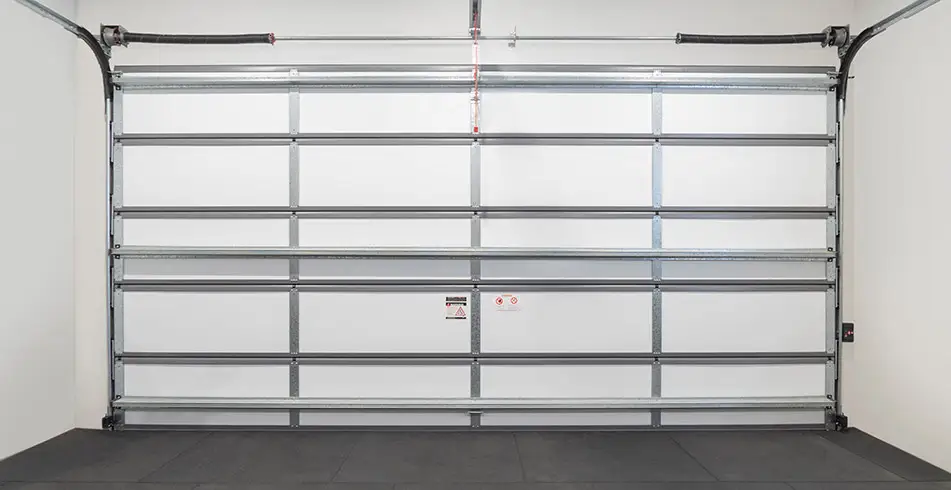
Another critical factor in the comparison is the “Construction Stack.” We generally categorize these into single-layer (hollow steel), double-layer (steel plus vinyl-backed insulation), and triple-layer (steel-insulation-steel). The triple-layer “sandwich” construction is the industry gold standard for high-end residential applications. It encapsulates the insulation between two sheets of heavy-gauge galvanized steel, protecting the core from damage and providing a finished interior look. Comparing these doors necessitates a look at the “skin-to-core” bond; in polyurethane doors, the foam is injected and expands to fill every void, creating a monolithic structure that is significantly stronger than a door with loosely inserted polystyrene blocks.
Finally, one must consider the “Acoustic Attenuation” variable. High-density insulation acts as a dampener for the “drum effect” inherent in large metal panels. When you compare insulated garage doors, the weight and density of the insulation contribute to a quieter operation. A door that “rattles” in the tracks during a windstorm or during the opening cycle is often a sign of insufficient internal mass. Therefore, the comparison is as much about the “soundscape” of the home as it is about the utility bill.
Contextual Evolution: From Hollow Shells to Composite Sandwiches
Compare insulated garage doors the history of the garage door is a story of material transition. Early carriage house doors were solid wood—naturally insulating but heavy and prone to rot. The post-war housing boom saw the rise of the stamped steel door. These were lightweight and affordable but provided zero thermal resistance. Throughout the 1970s energy crisis, the industry began experimenting with “glue-on” polystyrene panels, which were often unsightly and easily damaged.
The 1990s marked the advent of the “injected polyurethane” era. By using the steel skins as a mold, manufacturers could create a chemically bonded composite. This wasn’t just an upgrade in insulation; it was a revolution in door strength. The door became a structural panel capable of withstanding higher wind loads without the need for heavy external reinforcement bars. Today, the evolution continues with “Thermal Break” technology, where the exterior steel skin is physically decoupled from the interior skin by a non-conductive barrier, preventing the “bridge” that allows cold to migrate through the metal itself.
Conceptual Frameworks for Thermal Efficiency Compare Insulated Garage Doors
To properly assess a door, we apply three primary mental models:
-
The Thermal Bridge Framework: Imagine the metal skin of the door as a highway for heat. If the metal on the outside touches the metal on the inside, the insulation in the middle is bypassed. The most effective doors prioritize the “break” at the joints.
-
The Air-Infiltration Model: A garage door is essentially a giant “leak” in the house. Even the highest R-value insulation is useless if air can whistle through the gaps between the door and the jamb. Evaluating a door requires evaluating its “weatherstrip-to-surface” contact.
-
The Structural Rigidity Loop: Insulation isn’t just for temperature; it’s for “stiffness.” A door that doesn’t flex or bow under wind pressure maintains its seals better over time. In this model, insulation is viewed as a structural “honeycomb” that preserves the door’s geometry.
Taxonomy of Insulation: Materials and Construction Methods
There are fundamentally two paths in modern door insulation: Polystyrene and Polyurethane.
Realistic Decision Logic
If the garage is detached and unheated, a double-layer polystyrene door provides sufficient “stiffening” and basic protection at a lower cost. However, if the garage is attached with a bedroom above it, the injected polyurethane triple-layer door is non-negotiable for both heat retention and noise reduction.
Detailed Real-World Scenarios Compare Insulated Garage Doors
Scenario 1: The Suburban “Bonus Room”
A homeowner converts the space above the garage into a home office.
-
Problem: The floor of the office is perpetually cold, and the sound of the garage door opening disrupts conference calls.
-
The Comparison: A standard steel door vs. a 2-inch polyurethane sandwich door.
-
Outcome: The polyurethane door provides a 20-degree difference in garage ambient temperature and reduces the decibel level of the motor’s vibration by 30%.
Scenario 2: High-Wind Coastal Exposure
A home on the Florida coast requires a wind-rated door.
-
Constraint: The door must withstand 140 mph gusts without “imploding.”
-
The Role of Insulation: An insulated door is inherently more resistant to “buckling” than a hollow door. The internal foam acts as a brace for the steel skin.
-
Outcome: A high-density insulated door meets the code requirements with fewer bulky reinforcement struts, preserving the aesthetic.
Economic Dynamics: Costs, Resources, and ROI
The “Green Premium” for an insulated door is often reclaimed through three channels: energy savings, property value, and hardware longevity.
Cost and Range Table
Direct vs. Indirect Costs: While the unit cost of polyurethane is higher, the “indirect cost” of a hollow door includes higher HVAC wear and tear and a shorter replacement cycle due to the metal “fatiguing” faster without internal support.
Support Systems: Beyond the Insulation Core Compare Insulated Garage Doors
Insulation is part of an ecosystem. Without these support systems, the core is ineffective:
-
Bottom Weather Seal: A high-quality EPDM rubber “U-bulb” that conforms to the driveway’s imperfections.
-
Jamb Seals (Perimeter): Vinyl flaps that press against the outside of the door when closed to stop “draft-bypass.”
-
Thermal-Break Joints: A gasket or non-conductive tape between each horizontal section of the door.
-
High-Cycle Springs: Insulated doors are heavier. They require torsion springs calibrated for the specific weight of the “sandwich” stack.
-
Insulated Windows: If the door has glass, it must be dual-pane tempered glass with an argon-gas fill; otherwise, the windows act as thermal “holes.”
-
Side-Mount Openers: These reduce the “pulling” stress on the top section of heavy insulated doors, preserving the panel’s shape.
Risk Landscape: Failure Modes and Degradation
-
Delamination: In low-quality doors, the foam can separate from the steel skin over time, especially in high-heat environments (Western exposure).
-
Water Infiltration: If the bottom seal fails, water can be wicked into some polystyrene cores, causing the door to gain “water weight” and snap the springs.
-
Thermal Bowing: Dark-colored insulated doors can expand on the outside while staying cool on the inside, causing the door to “arch” and bind in the tracks.
-
Crushing/Denting: While foam adds strength, “voids” in the injection process can create “soft spots” where the steel can be easily dented.
Governance: Long-Term Maintenance and Monitoring Compare Insulated Garage Doors
To ensure the insulation continues to perform, a “Review Cycle” is necessary:
Quarterly Checklist:
-
Check the “Light Gap”: Close the garage door during the day and look for light around the edges. If you see light, you have air infiltration.
-
Lubricate the Joints: Insulated doors put more pressure on the hinges. Use a silicone-based spray to prevent metal fatigue.
-
Inspect the “Bulb” Seal: Look for cracks or flattened rubber at the bottom of the door.
Adjustment Triggers:
-
If the garage temperature drops below 45°F when it’s 30°F outside, the seals have likely failed, regardless of the door’s R-value.
-
Any “creaking” during travel suggests the door sections are rubbing together, potentially bypassing the thermal breaks.
Measurement, Tracking, and Evaluation
How do we prove the value of an insulated door?
-
Leading Indicators: The “Force Setting” on the garage door opener. A door that requires less force to move is a door that is maintaining its structural geometry.
-
Qualitative Signals: The “Knock Test.” A hollow door sounds like a drum; an insulated door sounds like a solid wall. This indicates the density of the bond.
-
Quantitative Evaluation: Using a non-contact infrared thermometer to measure the interior surface of the door vs. the exterior surface on a hot afternoon. A 40-degree delta is a sign of high thermal efficiency.
Common Misconceptions and Oversimplifications Compare Insulated Garage Doors
-
Myth: “The higher the R-value, the better.” Correction: R-18 is not twice as good as R-9. There is a diminishing return in energy savings; the jump from R-0 to R-9 is massive, but R-14 to R-18 is incremental.
-
Myth: “Insulation keeps the garage warm.” Correction: Insulation is passive. It retains heat. If there is no heat source (like a car’s engine or a furnace), the garage will eventually reach ambient temperature.
-
Myth: “Insulated doors are too heavy for my old opener.” Correction: A garage door’s weight is managed by the springs, not the motor. As long as the springs are properly calibrated, even a 1/2 HP motor can lift a heavy insulated door.
-
Myth: “You can just add DIY insulation kits.” Correction: These kits add weight but often lack the “thermal break” and “bonding” that provide the structural and thermal benefits of factory-insulated doors.
Conclusion: Strategic Synthesis
To compare insulated garage doors is to balance the invisible forces of thermodynamics with the tangible needs of the home. The modern garage is no longer an afterthought; it is a transition zone that requires careful engineering. Whether one chooses the structural monolithic strength of injected polyurethane or the cost-effective utility of polystyrene, the decision must be rooted in the specific environmental constraints of the property.
Ultimately, an insulated door is a long-term investment in the building’s integrity. It silences the suburban environment, braces the home against the elements, and stabilizes the interior microclimate. In the pursuit of a sustainable and comfortable home, the “composite sandwich” of the modern garage door stands as one of the most effective, albeit often overlooked, architectural assets available to the modern homeowner.