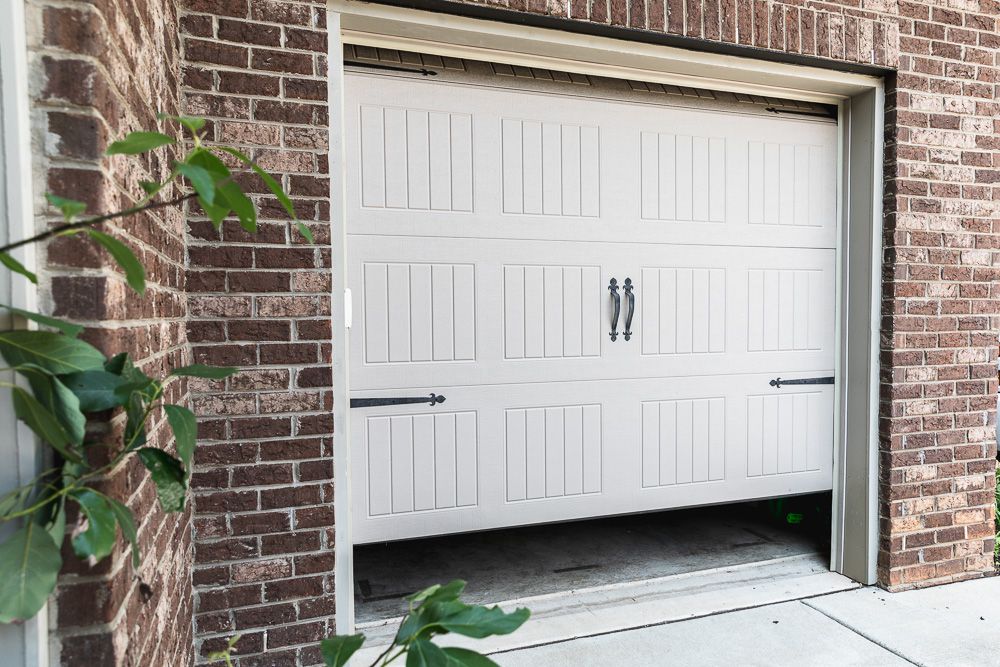
The Hidden Complexity of the Automated Entryway
Common garage door opener mistakes the garage door opener is perhaps the most undervalued mechanized system in the modern American home. While homeowners dedicate significant cognitive resources to HVAC efficiency or kitchen aesthetics, the device responsible for moving the largest wall of the house is often relegated to an afterthought—until it fails. This mechanical indifference is the primary breeding ground for systemic errors. An opener is not merely a motor; it is a sophisticated interface of electrical logic, kinetic force, and safety protocols that must operate in perfect synchronicity with the door’s counterbalance system.
Most operational failures are not the result of sudden hardware expiration, but rather a slow accumulation of procedural oversights. When an opener struggles, it is usually “screaming” for help, indicating that the structural equilibrium of the door has shifted. However, the typical response—increasing the motor’s force settings—only masks the underlying issue while accelerating the destruction of the drive gear. This fundamental disconnect between how we perceive the opener (as a “lifter”) and what it actually is (a “governor”) lies at the heart of the most persistent residential maintenance issues.
Achieving long-term reliability requires a transition from reactive troubleshooting to a proactive, editorial understanding of mechanical stewardship. We must analyze the “Error-Chain” that leads to premature motor burnout, stripped gears, and compromised security. By deconstructing the interaction between the drive rail, the logic board, and the external sensors, we can establish a definitive reference for avoiding the pitfalls that shorten the lifespan of this critical asset. This article serves as an analytical deep-dive into the nuances of automation stewardship, ensuring the garage remains a secure and efficient portal for decades.
Understanding “common garage door opener mistakes”
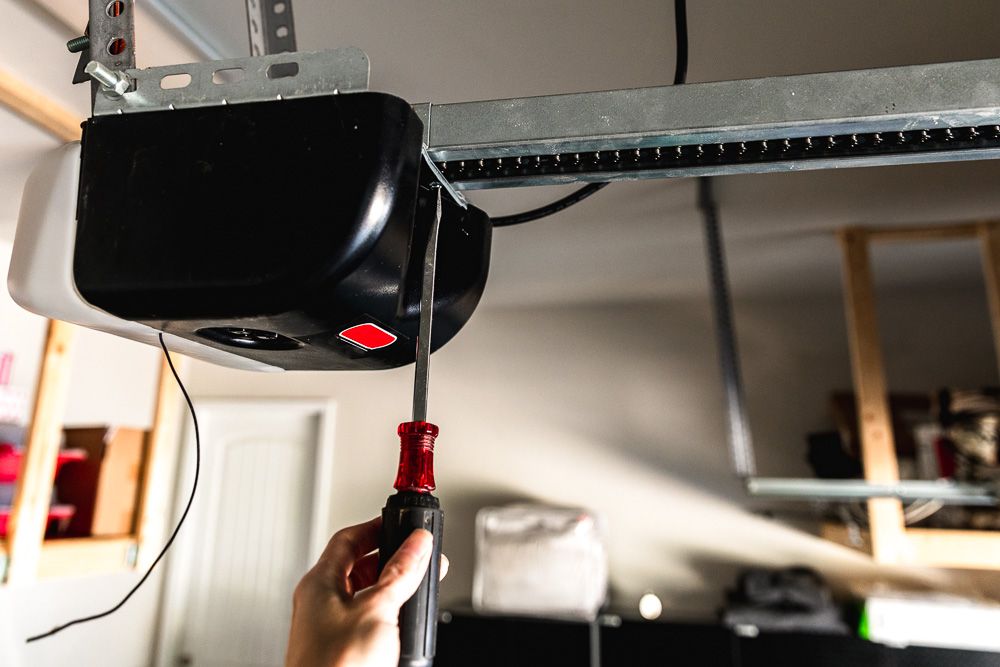
To meaningfully address common garage door opener mistakes, one must look past the superficial symptoms of a “stuck door.” From a multi-perspective standpoint, the most pervasive error is the “Force-Setting Fallacy.” Many homeowners and even inexperienced technicians assume that if a door stops halfway, the solution is to turn up the “Open” or “Close” force dial on the back of the motor. In reality, modern openers are designed to handle only a fraction of the door’s weight; the springs are responsible for the rest. Increasing the force is essentially forcing the motor to compensate for a mechanical failure elsewhere, such as a broken spring or seized rollers.
Oversimplification risks also manifest in the realm of “Electronic Entropic Neglect.” Users often ignore the “Blinking Code” diagnostics provided by the unit, assuming a temporary glitch. However, these codes are precise indicators of sensor misalignment or logic board overheating. Ignoring them often leads to a “Safety-Reverse” failure, where the door continues to descend even if an obstruction is present. This is not just a mechanical mistake; it is a liability risk. When we examine common garage door opener mistakes, we are really examining a failure to respect the safety-to-motion ratio that governs the entire assembly.
Furthermore, there is a “Material Mismatch” error. Installing a high-horsepower motor on a lightweight, uninsulated steel door can cause “Panel Flexing” or “Jolting,” which eventually cracks the top section of the door. Conversely, using a budget, medium-duty opener for a heavy carriage-house door results in “Gear Shearing.” The “Best” opener is not the most powerful one; it is the one whose torque profile perfectly matches the “Moment of Inertia” of the specific door it is tasked to govern.
Deep Contextual Background: The Evolution of Access Logic
Common garage door opener mistakes the garage door opener has evolved from a luxury novelty into a vital security node. In the 1950s, the first commercial units used simple radio frequencies that were notoriously insecure—often, a neighbor’s remote could open a house three doors down. This “Frequency Overlap” was the first great mistake of the industry, eventually leading to the development of “Rolling Code” technology in the 1990s. This transition moved the opener from a simple motorized switch to a sophisticated cryptographic device.
As the 21st century progressed, the opener underwent a “Kinetic-to-Data” shift. The introduction of DC (Direct Current) motors replaced the bulky, loud AC motors of the past. This allowed for “Soft-Start/Soft-Stop” technology, which significantly reduced the mechanical shock to the door tracks. However, this advancement introduced a new class of errors related to “Battery Backup” maintenance and Wi-Fi connectivity. Today, the opener is a “Connected Asset,” and the mistakes of today are as likely to be digital (unsecured networks) as they are mechanical (unlubricated chains).
Conceptual Frameworks and Mental Models Common Garage Door Opener Mistakes
To analyze the state of an automation system, apply these mental models:
1. The “10-Pound Rule”
A perfectly balanced garage door should feel like it weighs no more than 10 pounds when lifted manually. If you cannot lift your door with one hand, your opener is under extreme duress. This framework dictates that you must fix the “Balance” before you ever troubleshoot the “Opener.“
2. The “Point of Impact” Framework
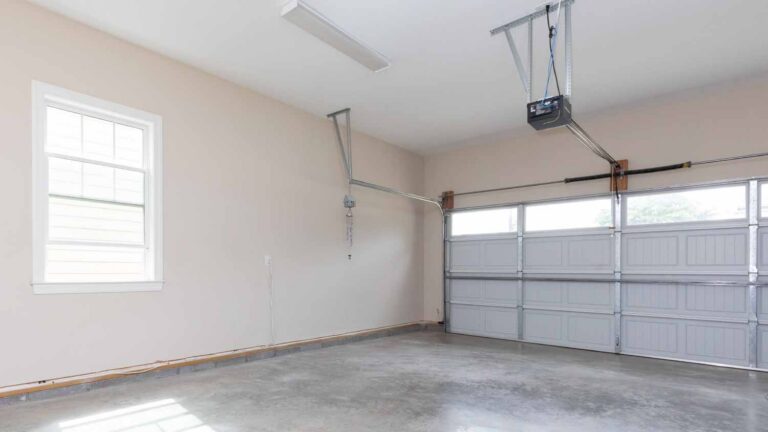
This model focuses on the “J-Arm”—the metal arm connecting the opener to the door. If the arm is at a steep angle, it pushes “Down” instead of “Forward” at the start of the cycle. This creates a mechanical disadvantage that strips the internal “Worm Gear” of the motor.
3. The “Signal-to-Noise” Diagnostic
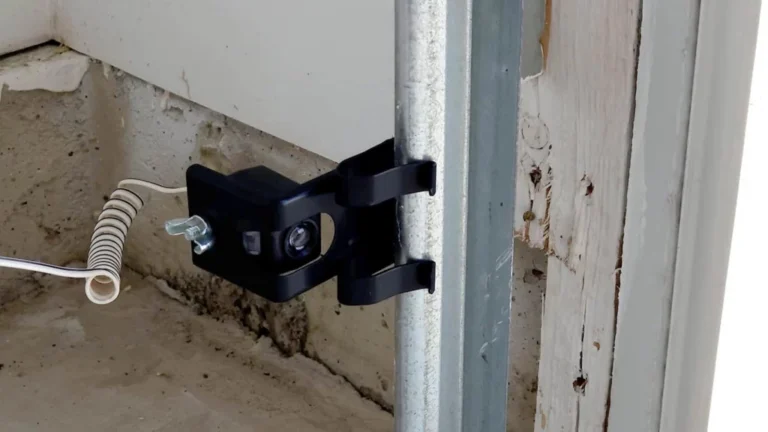
In an electronic context, “Noise” is anything that interferes with the safety sensors or the remote frequency. This framework encourages users to look for external factors: LED bulbs that emit EMI (Electromagnetic Interference) or dirt on the infrared lenses. Most “broken” openers are simply suffering from “Signal Noise.“
Key Categories of Drive Systems and Their Trade-offs
Avoiding mistakes requires selecting the drive logic that fits the environment.
Decision Logic: The “Drive-Rail” Choice
A pervasive mistake is choosing a “Chain Drive” for a garage that has a bedroom directly above it. While the chain is durable and cost-effective, the vibration is “Structure-Borne,” meaning the noise travels through the ceiling joists regardless of how much insulation is present. The Decision Logic suggests that for attached garages, the “Belt Drive” is a non-negotiable requirement for domestic peace.
Detailed Real-World Scenarios Common Garage Door Opener Mistakes
Scenario A: The “LED Interference” Mystery
A homeowner replaces their garage light bulbs with “High-Efficiency LED” units. Suddenly, the remotes only work from three feet away.
-
The Error: Using non-shielded LED bulbs that emit frequencies interfering with the opener’s 315MHz/390MHz receiver.
-
The Fix: Installing “Garage-Specific” LEDs or traditional incandescent bulbs to restore signal range.
Scenario B: The “Frozen Bottom Seal”
In a harsh winter, the bottom rubber seal freezes to the concrete floor. The homeowner hits the button.
-
The Error: The opener tries to “Rip” the door upward, stripping the “Nylon Drive Gear” inside the motor housing.
-
The Prevention: Using a “Soft-Start” DC motor with an “Amperage-Sensing” shutoff that detects the resistance and stops before damage occurs.
Scenario C: The “Extension-Cord” Fire Hazard
A homeowner installs a new opener but the outlet is four feet too far away.
-
The Error: Using a standard orange extension cord to power the unit.
-
The Risk: Openers have high “Inrush Current.” A thin extension cord can overheat, causing a voltage drop that fries the motor’s logic board or starts a fire in the ceiling.
Planning, Cost, and Resource Dynamics
The “Economics of Automation” are often skewed by the failure to account for “Indirect Costs” like security vulnerabilities.
Range-Based Automation Resource Table
The “Opportunity Cost” of a cheap opener is often found in the “Logic Board.” High-end units have “Encryption 2.0,” which prevents “Code-Grabbing” by tech-savvy intruders. A $200 saving on a budget motor could result in a significant security breach if the remote signal is easily cloned.
Tools, Strategies, and Support Systems Common Garage Door Opener Mistakes
-
Vibration Isolation Kits: Rubber bushings that sit between the opener and the mounting straps. Essential for reducing noise in attached garages.
-
Surge Protectors: A $15 investment that prevents a lightning strike or power surge from frying a $150 logic board.
-
Reinforcement Brackets: A steel plate that spans the top section of the door where the opener arm attaches. This prevents “Panel Tearing.“
-
The “2×4 Safety Test”: Placing a piece of wood on the ground. The door must reverse upon hitting it. Failure to do this test is a critical safety mistake.
-
Tension Monitors: Specialized sensors for wall-mount openers that stop the motor if the cables become slack, preventing a “Nested Cable” catastrophe.
-
Rolling Code Remotes: Ensuring all old “Dip-Switch” remotes are retired to prevent unauthorized access.
-
Battery Maintenance Logic: Setting a calendar reminder to replace the backup battery every 3 years, as a “Leaking Battery” can corrode the internal circuit board.
Risk Taxonomy: Identifying Compounding Failures
-
The “Forced-Down” Compression: When the “Down-Limit” is set too far, the opener continues to push the door against the floor after it has closed. This bows the rail and eventually cracks the “Carriage Assembly.“
-
The “Ghost-Opening” Phenomenon: Often caused by shorted wires in the wall-button or debris inside the remote. If ignored, the home remains open and vulnerable for hours.
-
The “Manual-Release” Trap: Pulling the red emergency cord while the door is “Open” and the springs are “Broken.” The door will fall like a guillotine.
-
The “Chain-Sag” Snag: A loose chain can jump off the sprocket, potentially jamming the motor and requiring a total teardown of the rail system.
Governance, Maintenance, and Long-Term Adaptation Common Garage Door Opener Mistakes
Operational excellence in automation is a matter of “Rigid Review Cycles.“
The Automation Stewardship Checklist
-
Monthly: “The Photo-Eye Cleanse.” Wipe the lenses of the safety sensors with a microfiber cloth to prevent “False Reversals.“
-
Quarterly: “The Screw-Drive/Chain Lube.” Apply a specialized, non-tacky lubricant to the rail. Never use heavy grease, which acts as a “Grit-Magnet.”
-
Bi-Annual: “The Force-Reverse Test.” Use the 2×4 method to ensure the safety logic is still functioning.
-
Annual: “The Battery Audit.” Check the health of the backup battery and the “Tightness” of the rail-mounting bolts.
Measurement, Tracking, and Evaluation
-
Leading Indicator: “Startup Lag.” If there is a delay between the click of the relay and the motion of the door, the logic board may be failing.
-
Lagging Indicator: “Gear Dust.” Finding white plastic shavings inside the motor cover is a definitive signal that the “Worm Gear” is being ground down by an imbalanced door.
-
Documentation Example: “The Limit-Setting Log.” Documenting the number of turns on the force-adjustment screws so you can revert to “Factory Baseline” during troubleshooting.
Common Misconceptions and Oversimplifications Common Garage Door Opener Mistakes
-
Myth: “A higher HP (Horsepower) motor is always better.” Reality: A 1.25 HP motor on a 100lb door will cause structural damage through sheer “Over-Torque.”
-
Myth: “The opener doesn’t need a surge protector.” Reality: Modern openers are essentially “Computers that Move Things”; they are highly sensitive to voltage spikes.
-
Myth: “I can install any opener on any door.” Reality: “High-Lift” or “Vertical-Lift” doors require specialized wall-mount openers; standard trolley openers will not work.
-
Myth: “WD-40 is the best lubricant for the rail.” Reality: WD-40 is a solvent that will strip the factory grease, leading to “Dry Friction” and noise.
-
Myth: “If the sensors are lit up, they are aligned.” Reality: Sensors can be “Marginally Aligned,” where they work in the shade but fail when the “Solar Load” (sunlight) hits them in the afternoon.
-
Myth: “My opener is loud because it’s old.” Reality: Opener noise is almost always a symptom of “Worn Hardware” or “Lack of Lubrication,” not age.
Ethical and Practical Considerations
In the domain of common garage door opener mistakes, we must address the “Safety Ethics” of automation. Bypassing safety sensors or overriding force limits is an act of negligence that endangers children and pets. Practically, we also face the “E-Waste” challenge. Replacing an entire opener because a $20 gear is stripped is environmentally irresponsible. A master editorial approach favors “Component-Level Repair” whenever the motor and logic board remain healthy. By maintaining the mechanical core, we reduce our footprint while ensuring the “Home-Entry Point” remains a high-functioning asset.
Conclusion: The Precision of the Automated Portal Common Garage Door Opener Mistakes
The garage door opener is the “Mind” behind the “Muscle” of the garage door. To avoid common garage door opener mistakes is to respect the delicate balance of kinetic energy and electronic control. It requires an understanding that the motor is a helper, not a heavy-lifter. By focusing on “Mechanical Neutrality”—ensuring the door is balanced, the sensors are aligned, and the drive-logic is appropriately matched to the load—the homeowner ensures that the largest moving object in their house remains a silent, secure, and reliable partner. In the architecture of the first impression, the “Smooth Operation” of the garage is the ultimate indicator of a well-governed home.